By Mike Ryan
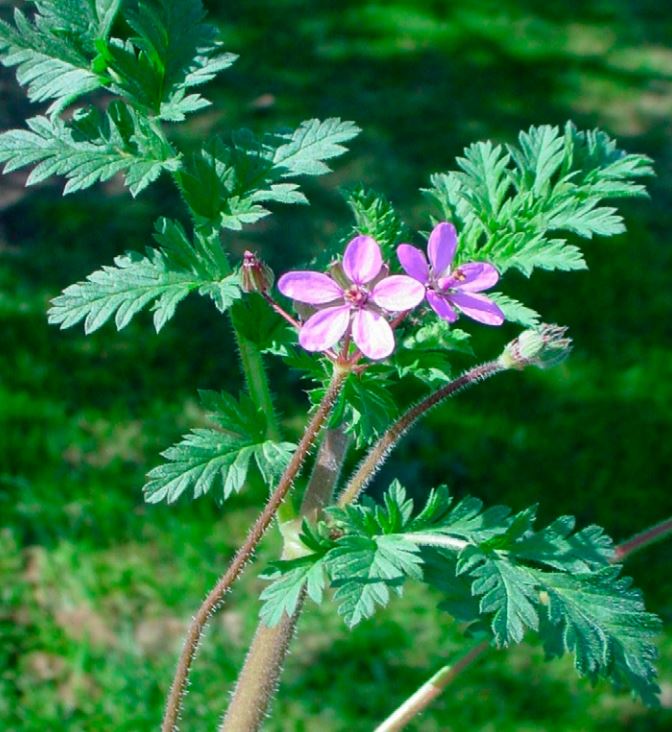
Characteristics
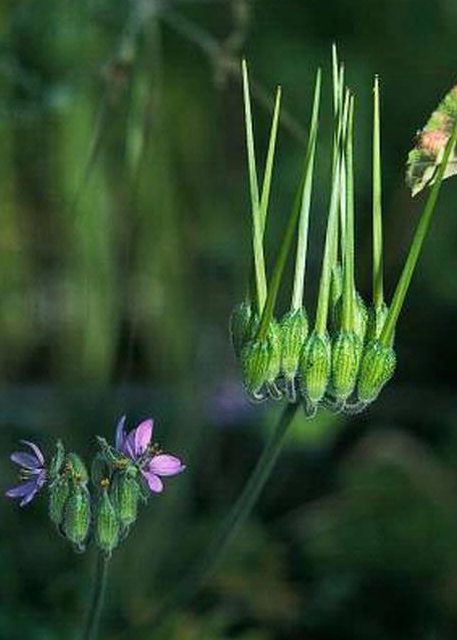
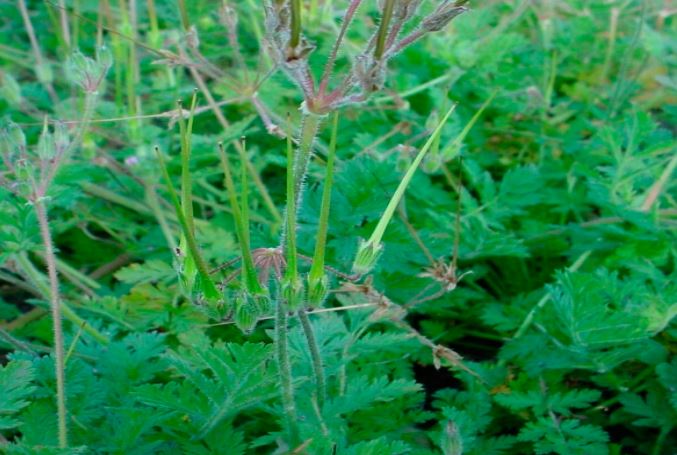
Redstem Filaree is a purple flowered annual that is native to the Mediterranean and Asia, and is considered an invasive weed in Colorado. This plant is incredibly aggressive, outgrowing nearly all surrounding native plants, and quickly taking over a landscape. Redstem Filaree can grow up to a height of 2 feet tall, it’s height depending on the surrounding vegetation that it competes with.
This plant reproduces by producing up to 10,000 seeds per plant. Those seeds can germinate the next season, when the soil is moist, or remain dormant for several years, creating a large “seed bank”. Once the seed matures, they eject outwards, which can travel several feet from the plant. These seeds are sharp and can penetrate a pet’s feet, and are easily inhaled.
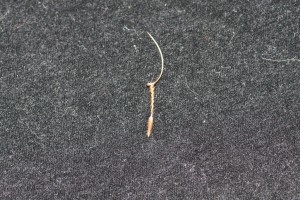
Seeds that germinate in spring will produce seeds that season. Seeds that germinate later in the season will overwinter, and produce seeds early in the next season.
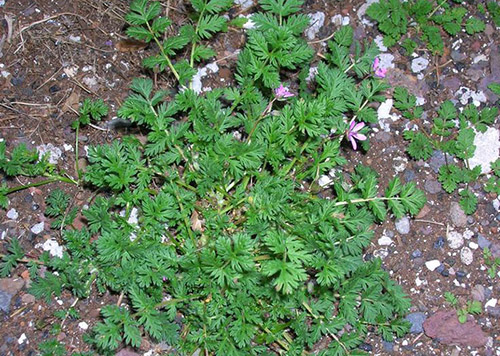
Control of Redstem Filaree
Because this plant is an annual, preventing seed production is the most effective method of eradication. This can be done several ways:
Mechanical: Often, the plant can be pulled out by the root if the soil is moist. Be careful to put this plant in the trash without shaking it. Redstem filaree can eject seeds from the seed pod up to 3 feet in any direction. Mowing is not considered effective because the mower blades miss the low growing seeds. In addition, mowing reduces the height of the competing native plants, giving a head start to the aggressive growth of red stem filaree.
Chemical: 2,4-D is a very low cost, effective herbicide that will kill the living plant. If you find an infestation, there will most likely be an extensive seed bank, which will continue to produce new plants until the seed bank is exhausted. The seed bank will require multiple applications of 2,4-D, usually a few weeks after rain causes seeds to germinate. This herbicide kills only broadleaf plants, leaving grasses untouched. Those grasses will quickly fill in where the filaree grew. As another option, a “pre-emergent” herbicide, which prevents seeds from germinating can be used in areas of high infestation. Much of the seed bank can be wiped out using a pre-emergent. Most pre-emergents need to be reapplied every 6 months or so.
My preference for treating this invasive weed is to use a solution of 2,4-D, diluted according to the label, mixed with Lazer blue dye. The blue dye is helpful in reminding me which plants I have already treated, and the color lasts several weeks.
 Homestead Hills Civic Association