By Mike Ryan
Characteristics
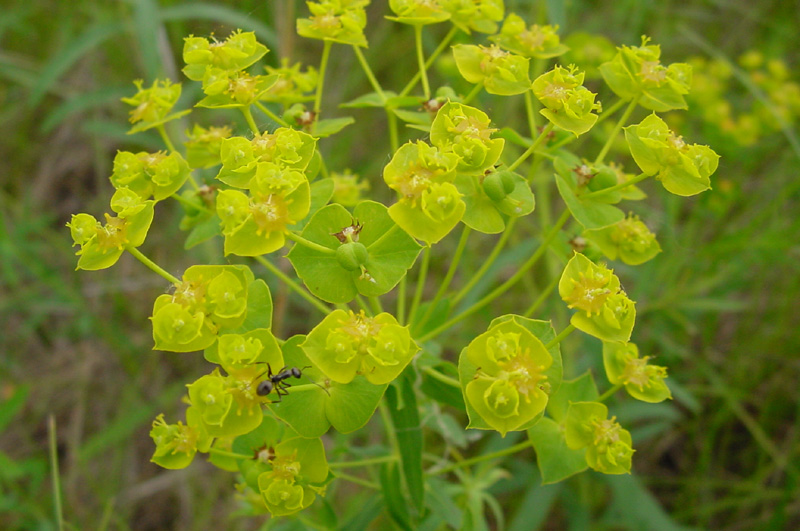
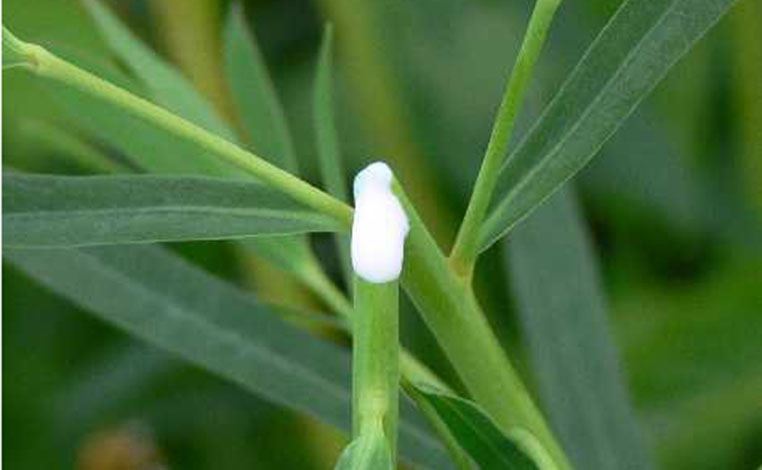
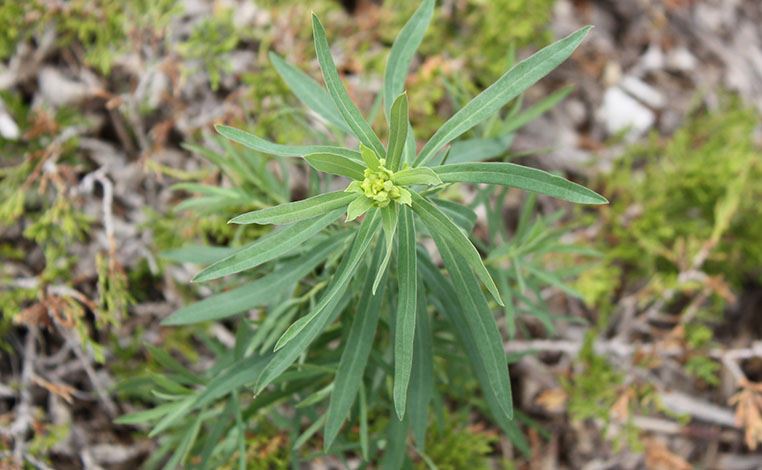
Leafy spurge is a non-native noxious and invasive weed that is probably the biggest threat to our neighborhood. Its roots can extend 30 feet deep, and extend 15 feet out from a plant. The white, sticky sap from this weed contains a substance called alkaloid euphorbon, which is toxic to humans and animals and is a known co-carcinogen. The sap seriously irritates the skin of people and animals and can cause human blindness upon eye contact. The root sap gives off a substance that inhibits the growth of grasses and surrounding plants.
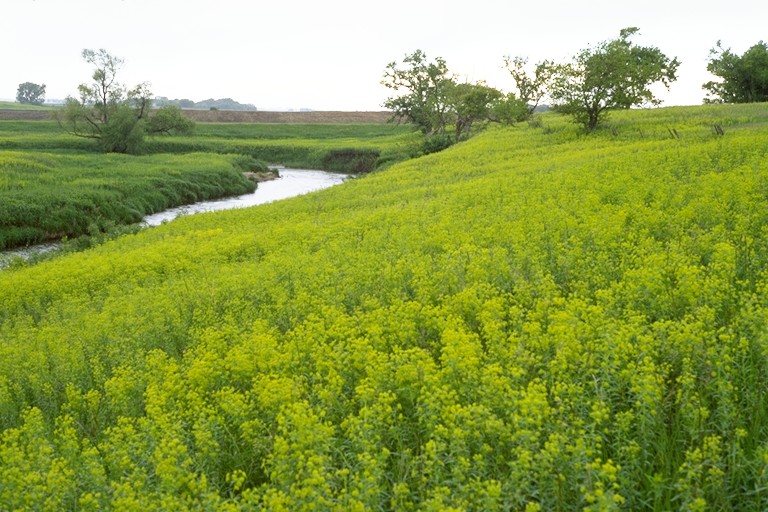
Deer and other animals quickly learn to avoid eating this plant. It is a very aggressive plant that can out compete other native species, and as a consequence, will completely take over land.
Control of Leafy Spurge
Leafy Spurge is a Perennial, which means that it comes back each spring, re-growing from the roots. In addition, it produces seeds that produce new plants.
Eradication of this plant is a challenge. Pulling the plant causes the stem to break off, leaving the root intact. The remaining root will continue to grow new plant shoots, so pulling spurge is considered ineffective. Mowing leafy spurge can limit seed production if mowed before the seeds become viable, and on a schedule of every 2-4 weeks, but mowing does not eliminate the root system. The roots will continue to send out new stems, even when other stems are mowed down.
Flea Beetles have shown to defoliate leafy spurge. Colorado Department of Agriculture has more information on this method of leafy spurge control using Flea Beetles.
The most effective way to treat leafy spurge is with 2,4-D herbicide. This herbicide kills broadleaf plants, but not grass, and will kill the stem and the root of leafy spurge within a few weeks of application. Because this does not kill grass, any grass that is growing near the spurge will now be able to move into the space occupied by the dead spurge. Most home improvement centers and gardening stores carry both a concentrate and a ready to use solution of 2,4-D. Amazon also carries 2,4-D.
My preference for treating this invasive weed is to use a solution of 2,4-D, diluted according to the label, mixed with Lazer blue dye. The blue dye is helpful in reminding me which plants I have already treated, and the color lasts several weeks.
 Homestead Hills Civic Association