By Mike Ryan
Characteristics
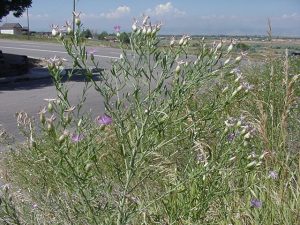
Russian Knapweed – This invasive weed is a perennial, reproduces from both seeds and roots, and exudes toxins into the soil that kill surrounding plants. It is also poisonous to livestock.
Control of this plant is marginally effective by pulling or mowing, which must be repeated every 3 or so weeks until the roots run out of energy.
2,4-D herbicide will eradicate the plant.
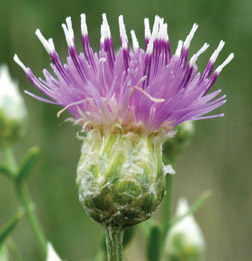
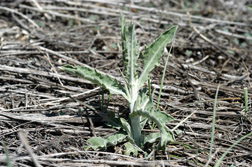
Spotted knapweed and Diffuse knapweed – These invasive weeds are very similar in appearance, and can grow as an annual, biennial or perennial. Flowers can be white or purple. As a young plant, it is easy to identify each by the “rosette”, low growing pattern and leaf shape. In the fall, this plant dries, breaks off, and becomes a tumbleweed, scattering seeds far away.
Pulling or mowing is marginally effective, but needs to be done periodically, draining the root of energy.
2,4-D herbicide will kill this weed.
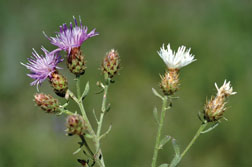
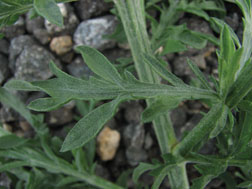

Tansy Aster, a native wildflower to Douglas County is common to our neighborhood, and looks very similar to Knapweed. The easiest way to distinguish between the two is to pinch below the flower. If it pokes you and hurts, the plant is knapweed. If the flower is soft and squishy, it is a Tansy Aster:)
You will enjoy this wildflower growing on your property, which blooms in late summer.

 Homestead Hills Civic Association