By Mike Ryan
Characteristics
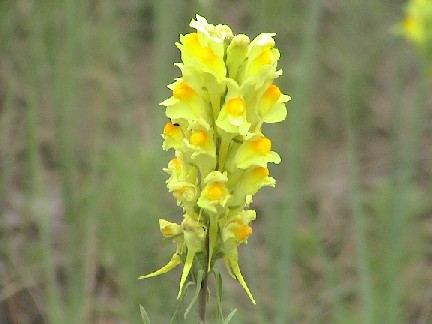
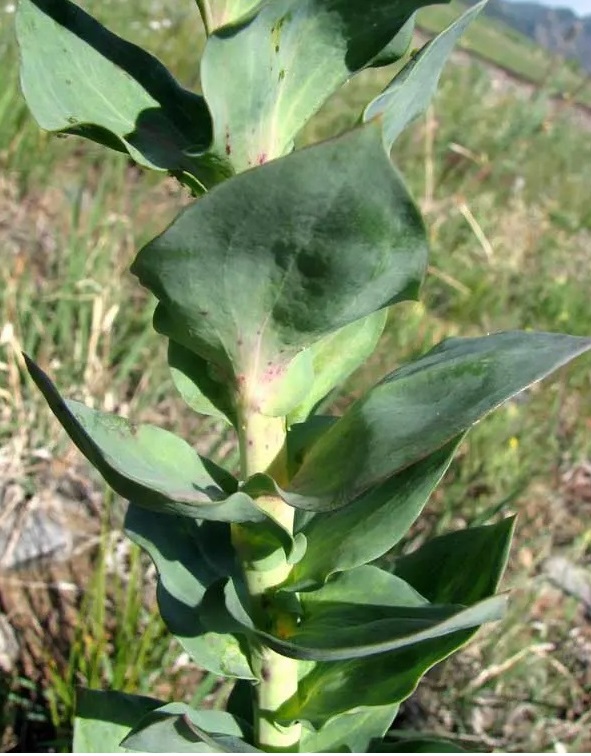
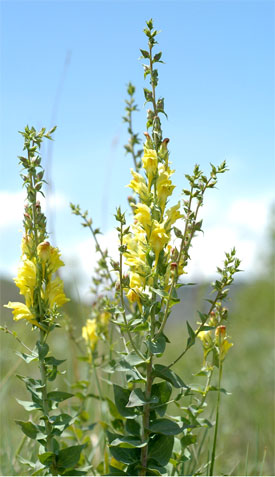
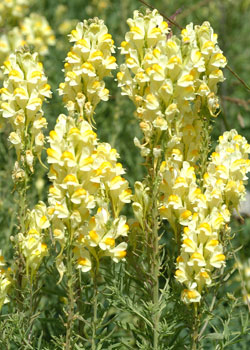
Dalmatian toadflax, Linaria genistifolia, is an invasive, perennial weed that is noxious in Colorado and other western states. On initial inspection, it has an attractive flower, but nothing consumes the plant, so it can out compete other native species.
Toadflax can easily take over disturbed land. Once established, dalmation toadflax will readily spread into non-disturbed areas mainly through vigorous root growth, which can reach 3 feet deep and 6 feet laterally. They flower beginning in June, and reach a height of 16 to 24 inches tall.
Control of Dalmation Toadflax
Dalmation Toadfoax is a Perennial, which means that it comes back each spring, re-growing from the roots. In addition, it produces seeds that produce new plants.
Eradication of this plant is a challenge. Pulling the plant causes the stem to break off, leaving the root intact. The remaining root will continue to grow new plant shoots, so pulling toadflax is considered ineffective. Mowing toadfoax can limit seed production if mowed before the seeds become viable, and on a schedule of every 2-4 weeks, but mowing does not eliminate the root system. The roots will continue to send out new stems, even when other stems are mowed down.
The most effective way to treat Toadflax is with 2,4-D herbicide. This herbicide kills broadleaf plants, but not grass, and will kill the stem and the root within a few weeks of application. Because this does not kill grass, any grass that is growing near the toadflax will now be able to move into the space occupied by the dead toadflax. Most home improvement centers and gardening stores carry both a concentrate and a ready to use solution of 2,4-D. Amazon also carries 2,4-D.
My preference for treating this invasive weed is to use a solution of 2,4-D, diluted according to the label, mixed with Lazer blue dye. The blue dye is helpful in reminding me which plants I have already treated, and the color lasts several weeks. There is a good chance that eradication will involve multiple treatments several weeks apart.
 Homestead Hills Civic Association