Invasive weeds are defined as non-native plants that usually have no natural enemies. As a consequence, they reproduce and spread, crowding out native plants.
Noxious weeds are defined as a plant that causes injury to wildlife or property.
Unfortunately, there are several species of noxious and invasive weeds that are taking over property in our neighborhood. These weeds will out-compete the natives, and quickly predominate a property.
The intention of this page is to help make you aware of the invasive weeds that are present in our neighborhood properties, and educate you on how to eliminate each species of invasive weed.
Much of the content of this website is a result from consultation with John Murgel Horticulturalist for CSU Extension Office in Castle Rock. He is a great resource for noxious weed information, and an expert in this field, and passionate about helping residents of Douglas County regarding issues with plants and diseases.
Below is a list of some of the invasive weeds that are common to Parker, and found in our neighborhood:
- Leafy Spurge
- Red Stem Filaree
- Cheatgrass
- Canadian Thistle
- Dalmation Toadflax
- Knapweed
- Field Bindweed
- Puncturevine (Goathead)
For a complete list of noxious weeds found in Douglas County, click here.
About me: I find it ironic that I am posting information about invasive weeds in our neighborhood, as this is not an area that I studied formally. My knowledge of noxious and invasive weeds is learned through the school of hard knocks, and a determination to look out on my property and see only native grasses and native wildflowers, and eventually, never have to mow anything.
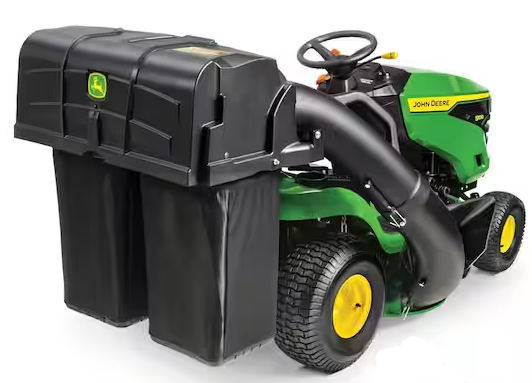
I have used a combination of methods to treat noxious weeds on my property, including mowing/bagging and herbicide. I have a small tractor mower that has a bagger on the back. I use this to mow and collect seeds that I don’t want to propagate the following year(s).
I use a selective herbicide, 2,4-D to kill broadleaf plants, which leaves grasses to fill in the place where a noxious broadleaf plant existed. This herbicide is generally considered non-toxic to humans. For more information on 2,4-D:
National Pesticide Information Center
It is important for anyone that is considering using a herbicide to read as much as they can, so that they feel comfortable with this chemical. Please don’t assume that my use of a herbicide suggests that the herbicide is safe for others.
I do not use “Roundup”, as this herbicide has been implicated in many cases of leukemia.
Is 2,4-D safe for the drinking water in the Dawson Aquifer? I was concerned about using this herbicide, imagining that it could enter the Dawson Aquifer, so I spoke with Helen F. Malenda a Hydrologist with the USGS Colorado Water Science Center. She has tested water in the Dawson Aquifer, and found that the “youngest” water in this aquifer (the water at the top of the formation) is 10 years old. 2,4-D breaks down relatively quickly when exposed to water and soil. Most experts agree that it’s decomposition “half life” is 1 to 14 days, with an average of about 6 days.
Mike Ryan, your neighbor on Robin Rd.
 Homestead Hills Civic Association